
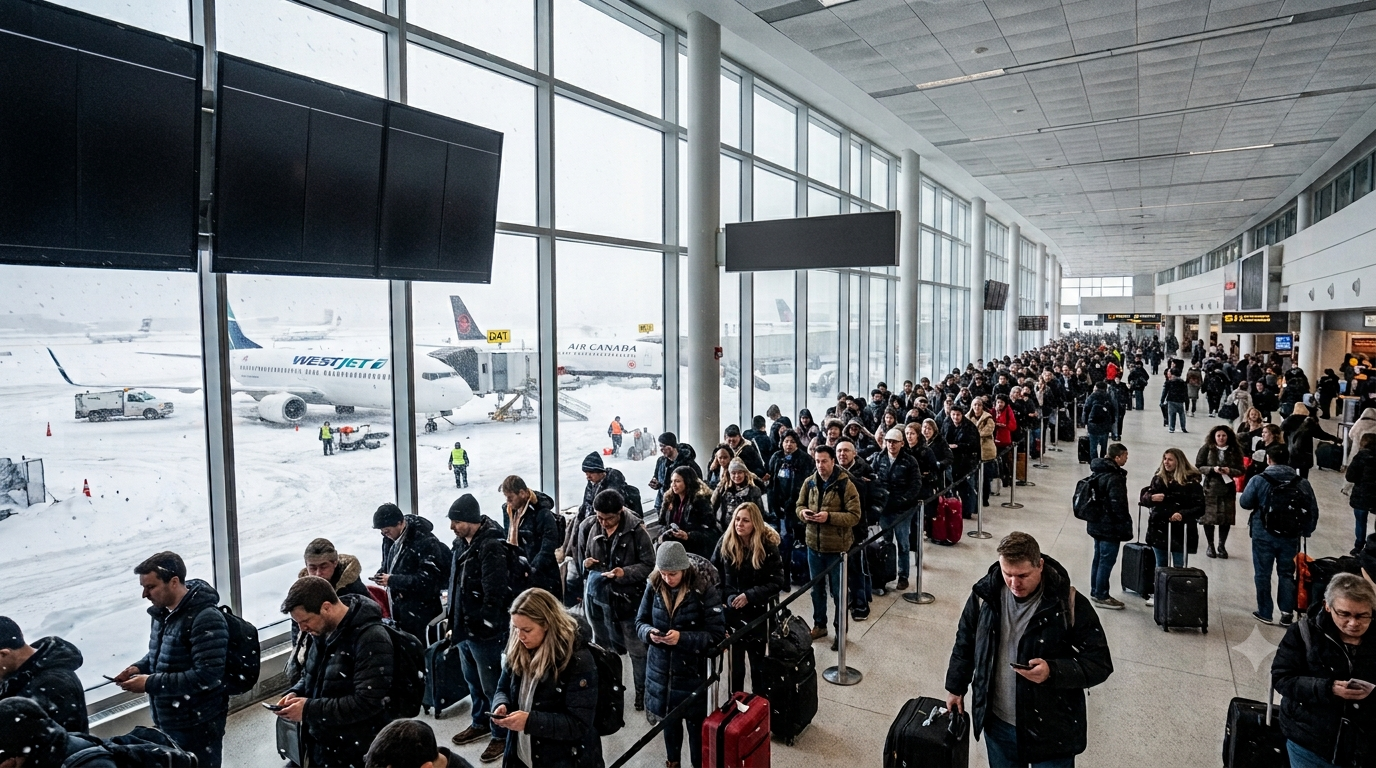

Severe thunderstorms triggered hundreds of flight delays and cancellations at Canada’s busiest airports this summer. Here’s what travellers should know.
Canada flight delays 2026
If you’ve flown anywhere in Canada this summer, chances are you’ve felt the ripple effects of a rough stretch for the country’s aviation system. Severe thunderstorms have repeatedly grounded flights at major hubs from Toronto to Vancouver, leaving thousands of travellers scrambling for rebooking options. Whether you’ve got a trip coming up or you’re still recovering from a cancelled flight, here’s what’s been happening and what your rights actually are.
A severe thunderstorm system moving through Ontario triggered 601 delays and 131 cancellations at key airport hubs in early July, with wind gusts up to 100 km/h, heavy rain exceeding 30 mm, and large hail forcing air traffic controllers to implement ground holds.
Toronto Pearson was the hardest-hit facility, logging 275 delays and 46 cancellations, while the disruption cascaded outward. Vancouver International Airport registered 102 delays purely from downstream effects of aircraft arriving late from eastern hubs.
This followed an even larger disruption days earlier: 85 flights cancelled and 462 delayed across eight major Canadian airports on July 1, involving Air Canada, Jazz, WestJet, Porter, Flair, and Air Canada Rouge.
Summer is peak travel season, and this level of disruption hits families, business travellers, and connecting passengers particularly hard. Beyond the inconvenience, there are real financial and compensation questions at stake for anyone affected.
Jazz Aviation recorded the highest cancellation count among regional carriers with 43 flights cut on July 1 alone.
Montreal-Trudeau logged 95 delays and 14 cancellations, while Calgary International saw 43 delays and 2 cancellations.
Under Canada’s Air Passenger Protection Regulations, compensation eligibility depends on whether the disruption was within the airline’s control — weather-related delays are generally treated differently than mechanical or staffing issues.
Passengers who decline rebooking on a cancelled flight are entitled to a refund regardless of the cause.
Aviation analysts point to a structural issue underlying these disruptions: Canada’s aviation network is heavily centralized around the Toronto-Montreal corridor, meaning a single severe storm system over southern Ontario can ripple across the entire country within hours. North American cancellation rates have climbed steadily since early 2026, with no sign of reversal, according to flight-tracking data.
Expect continued volatility through the rest of the summer storm season. Passengers should build extra buffer time into travel plans, especially for connections through Toronto Pearson, and keep a close eye on real-time flight tracking apps rather than relying solely on airline notifications.
Am I entitled to compensation for a weather-related flight cancellation?
It depends — compensation under Canada’s Air Passenger Protection Regulations generally applies only when the disruption is within the airline’s control, which typically excludes severe weather.
Can I get a refund if I don’t want to be rebooked?
Yes, passengers who decline rebooking after a cancellation are entitled to a refund.
Which Canadian airport has been hit hardest?
Toronto Pearson has consistently reported the highest number of delays and cancellations during recent storm events.
How can I track my flight in real time?
Apps like FlightAware or your airline’s official app tend to post updates faster than general notifications.
