

Heat warnings and wildfire smoke are hitting large parts of Canada this week as a U.S. heat wave pushes north. Here’s what to expect and how to stay safe.
Canada heat warning
Canadians from the Prairies to the Great Lakes are being told to brace for another round of dangerous heat this week, layered on top of wildfire smoke drifting in from the north and south. It’s the latest chapter in what’s already shaping up to be a wild, unpredictable summer — floods in the west, storms in the east, and now a heat surge pushing temperatures well past 30 degrees in major cities. Here’s what’s driving it and how to stay safe.
A robust area of high pressure building over the central U.S. is pushing significant heat northward into Canada this weekend and beyond, with the southern Prairies and Great Lakes region expected to feel it most. Regina and Winnipeg could approach 30°C with humidex values nearing 40, while Toronto, Windsor, and Ottawa should expect temperatures over 30°C with humidity pushing “feels-like” readings close to 40.
This follows a punishing stretch just days earlier: Toronto Public Health reported 39 heat-related emergency room visits between June 30 and July 4 during a heat wave that peaked at 36°C with a maximum humidex of 48.
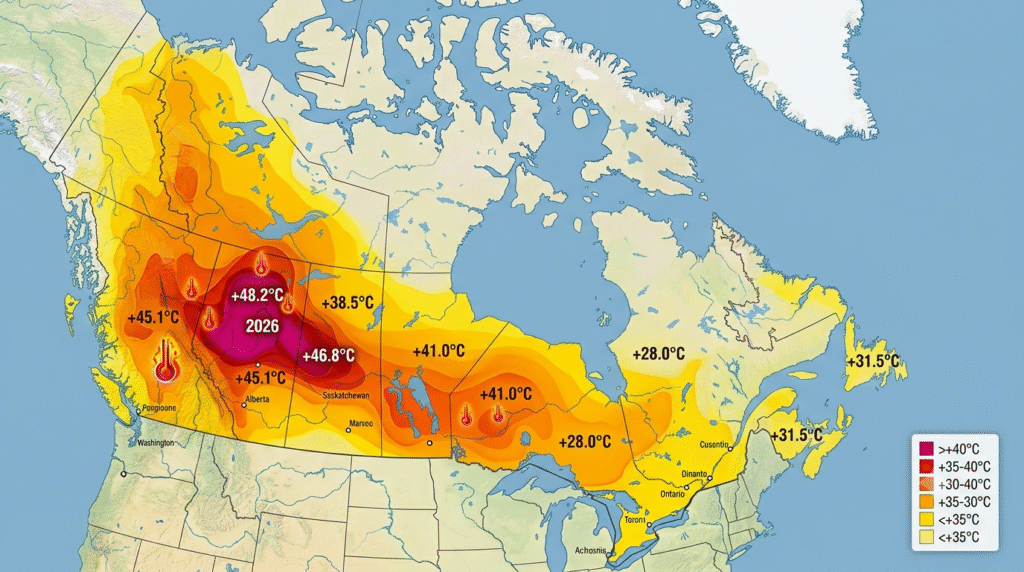
This isn’t just uncomfortable it’s dangerous, especially for older adults, people who live alone, and those without air conditioning. And the timing is awkward: Calgary is mid-Stampede while flows on the Bow and Elbow rivers remain high, and wildfire smoke from northern Saskatchewan has triggered an air quality warning in the city. Combined heat and smoke events are especially risky because overheating can become more dangerous to your health when wildfire smoke is present.
Dry, extreme heat in the U.S. Plains is raising wildfire risk, with smoke potentially drifting thousands of kilometres into Canada.
Cooler, more seasonal weather persists in B.C. and Atlantic Canada for now, offering some regional relief.
Heavy rainfall in Western Canada has caused flooding and evacuation alerts, stranding up to 1,500 campers in Kananaskis earlier this week.
Thunderstorms and rainfall may develop across the central and northern Prairies over the weekend, offering a mixed bag of relief and new hazards.
Environment Canada aims to issue heat warnings 18 to 24 hours in advance of an extreme heat event.
Meteorologists describe this summer as unusually chaotic. Extreme weather has hit nearly every part of the country this year — floods in Manitoba, heat waves across Ontario, Quebec, and B.C., and wildfires plaguing the North. Climate researchers note Canada is warming twice as fast as the global average, with its Arctic warming nearly four times as fast, a trend that’s making these “heat dome” events roughly three times more common than in the 1950s.
Expect the heat to persist through early next week before cooler air potentially moves in behind it. Environment Canada will likely extend or renew heat warnings as conditions evolve, and air quality alerts tied to wildfire smoke could pop up in new regions depending on wind patterns.
Focus Keyword: Canada heat warning
How do I know if there’s a heat warning in my area?
Check Environment Canada’s weather alerts or use the WeatherCAN app for custom notifications.
Is wildfire smoke worse when combined with heat?
Yes — light wind and high pressure trap pollutants near the ground, and both heat and smoke stress the body simultaneously.
What are the signs of heat exhaustion?
Headache, nausea, dizziness, thirst, dark urine, and intense fatigue are early warning signs.
Who’s most at risk during heat waves?
Older adults, people living alone, infants, and those without air conditioning face the highest risk.
This latest heat surge is one more sign of a summer defined by extremes — heat in the centre, floods in the west, and smoke drifting from every direction. Staying informed on local alerts, checking on vulnerable neighbours, and taking heat seriously even without a formal warning are the best ways Canadians can protect themselves through it.
