
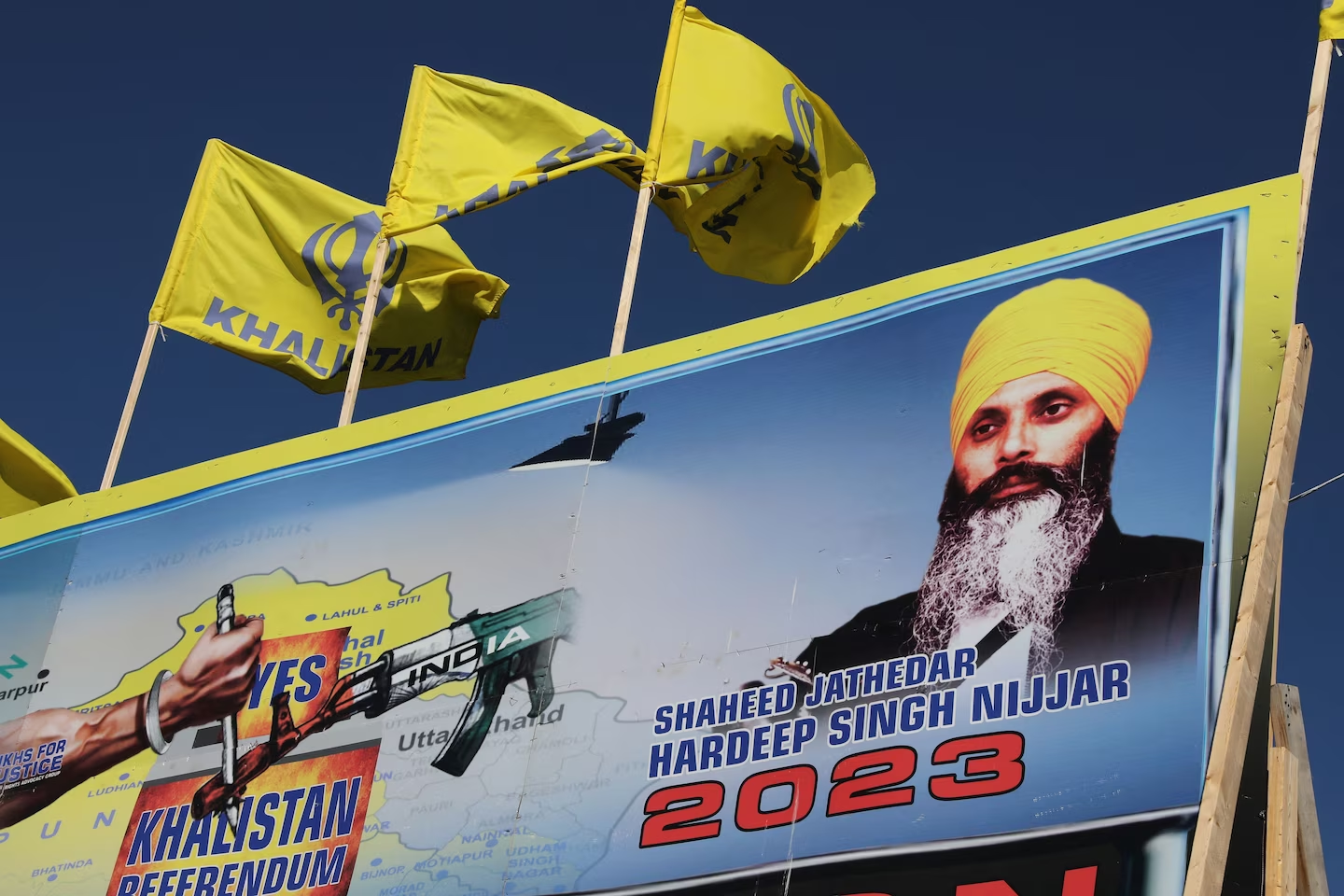

U.S., Canadian, and European authorities charge 37 defendants tied to Indian crime syndicates, including the 2023 assassination of Hardeep Singh Nijjar.
A killing that once triggered a full-blown diplomatic rupture between Canada and India has taken a major legal turn. Federal authorities in the U.S. have unsealed charges against the alleged mastermind behind the 2023 assassination of Sikh activist Hardeep Singh Nijjar in British Columbia — part of a sweeping international operation targeting three transnational crime networks. This story matters to Canadians well beyond the Sikh community, touching on public safety, cross-border drug trafficking, and Canada’s foreign relations.
On July 7, U.S., Canadian, and European law enforcement unsealed three federal indictments charging 37 operatives tied to global Indian crime syndicates for racketeering, targeted killings, and drug smuggling pipelines. The coordinated action, dubbed Operation Hard Ball, resulted in 24 arrests across the U.S., Canada, and Europe, 50 search warrants, and the seizure of over 1,000 kilograms of narcotics and dozens of weapons.
Among those charged: jailed gang leader Lawrence Bishnoi and his alleged North American lieutenant, Satinderjeet “Goldy Brar” Singh, accused of orchestrating the June 18, 2023, shooting of Nijjar in Canada, allegedly directing the plot from behind bars in India using smuggled phones.
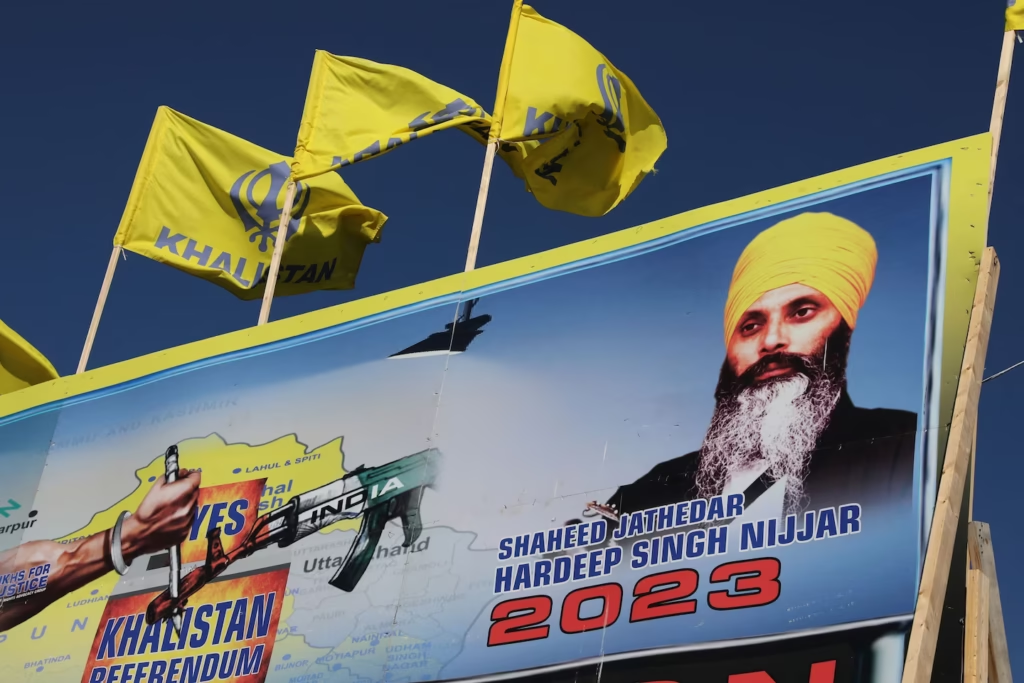
Nijjar’s killing didn’t just shock the Sikh diaspora — it plunged Canada-India relations into a genuine crisis. The assassination strained diplomatic ties after Canadian officials publicly linked agents of the Indian government to the plot, prompting both countries to expel diplomats. These new charges give the case a concrete legal path forward for the first time in years.
The broader crackdown also matters for public safety at home: three defendants were arrested directly in Canada, and RCMP-led search warrants targeted properties in British Columbia.
Three individuals from British Columbia were taken into custody by the RCMP on Provisional Arrest Warrants, pending extradition to the U.S.
Search warrants were executed in West Vancouver, White Rock, and Surrey.
Authorities are still hunting 10 fugitives — seven in the U.S., two in India, and one in Europe, including Goldy Brar himself.
The FBI is offering a $50,000 reward for information leading to fugitives’ arrest.
Nijjar was 45 when he died, a prominent organizer within the Khalistan independence movement and a Canadian citizen.
RCMP Commissioner Mike Duheme framed the operation as dismantling “organised criminals who used murder, cruelty and fear” to terrorize diaspora communities. Notably, U.S. prosecutors were careful to clarify that the indictment does not accuse the Indian government of involvement in the assassination a distinction that may shape how Ottawa and New Delhi handle diplomatic repair efforts going forward.
Canada has the largest Sikh population outside India, and activism around Khalistan independence has long been a friction point between the two governments.
Extradition proceedings for the three B.C.-based suspects will take time and could face legal challenges. Meanwhile, the manhunt continues for Goldy Brar and other fugitives, and Canadian and Indian diplomats will likely face renewed questions about whether this development helps or complicates efforts to normalize relations.
Who was Hardeep Singh Nijjar?
A Canadian citizen and prominent Sikh separatist activist shot and killed in Surrey, B.C., in June 2023.
Does the indictment accuse the Indian government?
No — it charges individual crime syndicate members, not the Indian state.
How many people were arrested in this operation?
24 arrests globally, including three in Canada, with additional fugitives still being sought.
What happens to the Canadian suspects now?
They face extradition proceedings to face charges in U.S. federal court.
Conclusion
This case shows how a single act of violence in a Surrey parking lot rippled into a years-long international investigation spanning three continents. For Canadians, it’s a reminder that organized crime rarely respects borders — and that resolving a case like Nijjar’s takes patient, coordinated police work rather than quick answers.